SBMT HOLDS 3RD ANNUAL RESEARCH WORKSHOP AT OGBONNAYA ONU POLYTECHNIC ABA
The School of Business Management and Technology (SBMT) of Ogbonnaya Onu Polytechnic, formerly Abia State Polytechnic, Aba, recorded another defining academic milestone as it successfully held its 3rd Annual Project Writing Workshop for Final Year Students.
The workshop, now an established academic tradition in the institution, was initiated by the Dean of SBMT, Dr. Chinweoke Nwaeze, to strengthen students’ research capacity and enhance the quality of project writing.
The initiative debuted on July 10, 2024, at the ICT Auditorium, while the second edition was held on February 27, 2025. Since inception, the programme has steadily expanded in scope, participation, and impact.
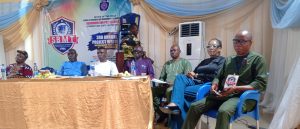
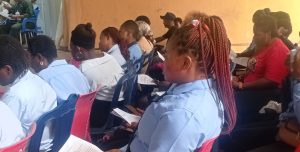
The third edition, held on Thursday, February 19, 2026, at the School Auditorium, attracted an unprecedented turnout of staff and students. It was chaired by the immediate past Dean of SBMT, Dr. Chinenye C. Ehiodo.

Declaring the workshop open, the Deputy Rector (Academic), Dr. Fijoh Ome Kalu, described research as the bedrock of quality teaching, evidence-based policy, and sustainable development.
He urged students to take the workshop seriously, noting that such opportunities were unavailable during his undergraduate days.
“Research remains the foundation of innovation and national development. Institutions of higher learning must not only transmit knowledge but generate solutions through rigorous and relevant research,” he stated, commending the Dean for his foresight and consistency in sustaining the programme.
In his remarks, the Chairman of the occasion, Dr. Chinenye C. Ehiodo, praised the Dean’s tenacity and encouraged students to maximize what he described as a rare academic privilege capable of shaping their future academic pursuits, particularly at the postgraduate level.

Earlier, the Dean and Chief Facilitator, Dr. Chinweoke Nwaeze, expressed gratitude to God and the institution’s leadership for their unwavering support, describing the workshop as a strategic intervention aimed at repositioning project supervision and research output within the School.
He cautioned against reducing project writing to mere compilation of materials, stressing that research must be rigorous, structured, and ethical.
He also reminded lecturers that project supervision is not a revenue-generating venture but a responsibility anchored on mentorship and academic integrity.
According to him, the Polytechnic does not charge fees for project supervision, and students reserve the right to request a change of supervisor in cases of genuine concerns.
Dr. Nwaeze further announced that his second term in office, following his re-election on February 4, 2026, would prioritize training, research expansion, staff and student welfare, and sustained academic innovation.
In his appreciation remarks, Dr. Nwaeze expressed profound gratitude to the Rector, Engr. Prof. Christopher Kalu Okoro, whom he described as an innovative and supportive leader. He noted that he had never needed to formally lobby the Rector for funds, as approvals for academic initiatives were always granted promptly. He cited the workshop as an example, stating that it received approval within ten minutes of his request.
He also extended appreciation to the Executive Governor of Abia State, His Excellency, Dr. Alex Chioma Otti (OFR), affirming his strong support for the Governor’s developmental strides in the state.
The Dean further thanked the Commissioner for Sports, Hon. Nwaobilor Ananaba, for his consistent support, as well as the Executive Chairman of Obingwa LGA, Hon. Maxwell Nwadike, for his encouragement and assistance.
On a personal note, Dr. Nwaeze appreciated his family—his siblings and children—and paid special tribute to his wife, Mrs. Gift Nneamaka Nwaeze, acknowledging that her unwavering support had been instrumental to his achievements.
The workshop featured robust academic sessions delivered by seasoned scholars and industry experts.

The Director of Ethics and Quality Assurance, Dr. Ukandu Clement Nwankwo, set the tone with a lecture on Research Proposal Writing.
He clarified the distinction between research proposals and research reports, emphasizing that proposals are written in the future tense as statements of intent, while reports are presented in the past tense as completed work.
He also explained the difference between academic proposals and grant-oriented proposals.

On topic selection, introduction, and literature review, Dr. Kingsley Onyekachi Onyele of Rhema University, Aba described research as a universal academic exercise requiring critical investigation and structured presentation across five chapters, with particular emphasis on Chapters One and Two.

Speaking on Research Methodology and Data Analysis, Dr. Okoroafor Onyedikachi Michael outlined primary and secondary data methodologies, explaining data generation techniques such as surveys, questionnaires, journals, and statistical sources.

Rounding off the lectures, Dr. Azu Oko Kalu addressed Summary, Conclusion, Recommendations, and References, underscoring the indispensability of proper referencing in scholarly work.
“Without references, your research is null and void,” he warned, describing research as a continuous intellectual exercise.

The event was meticulously organized under the leadership of the Local Organizing Committee Chairman, Chukwu M. K. (PhD), whose team ensured seamless accreditation, effective coordination, and extensive media coverage, while Ikonne Ugwueze, Esq., anchored the programme with remarkable poise to the admiration of all and sundry.
Dignitaries present included former Deputy Rector, Dr. C. S. Mpamugo, and Dr. Ezebunwa Ubani, among others.
The academic engagement also featured light entertainment, including musical performances by Aba-based artiste Exnel and student performers, adding colour to the intellectually stimulating event.

The workshop concluded with a renewed commitment by both staff and students to elevate research standards within SBMT and consolidate the Polytechnic’s growing reputation as a centre for practical training and scholarly excellence.