
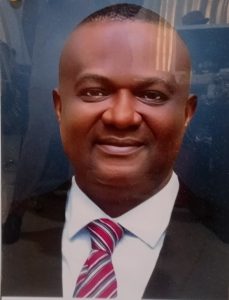
ABSCOHMAT CRISIS: THE STORY BEHIND THE RIFT BETWEEN EMBATTLED BURSAR NWAUBANI AND COLLEGE MANAGEMENT

ABSCOHMAT CRISIS: THE STORY BEHIND THE RIFT BETWEEN EMBATTLED BURSAR NWAUBANI AND COLLEGE MANAGEMENT
As embattled Bursar Nwaubani alleges mismanagement, illegal appointments, salary issues, financial impropriety and abuse of office, Rector, Principal officers of ABSCOHMAT give their side of the story
The simmering controversy at the Abia State College of Health Sciences and Management Technology (ABSCOHMAT), Aba, has assumed a new dimension, with the embattled Bursar of the institution, Kingsley Nwaubani, taking his grievances to the media while the management of the college insists that his allegations are unsubstantiated and that the dispute arose largely from his refusal to comply with official directives.
Nwaubani, who has featured in interviews across radio stations, online platforms and other media outlets, has made a series of allegations against the management of the institution, including claims bordering on financial management, staff appointments, tenure of principal officers, suspension of workers, payment of salaries and the general administration of the college.
He has also alleged that some officials occupying key positions in the institution lack the requisite credentials for their appointments, while accusing the management of running the college as though it were a private concern.
In one of his media appearances, Nwaubani was reportedly asked whether he had documentary evidence to substantiate his allegations. His response was emphatic: “I have it, 100 per cent evidence.”
The allegations have generated considerable interest because of the implications for the reputation of one of the state’s major health training institutions.
In an attempt to get to the root of the dispute and hear directly from the college authorities, Signal Magazine visited the institution and met with the Rector, Aloy Okezie.
The Rector, in an unusually detailed account, responded to several of the allegations while other principal officers of the college were invited to corroborate or clarify aspects of the management’s position.
Among those present were the Deputy Rector (Academic), Dr. Adimuko Prince Obieze; the Registrar, Elder Ibendiogwu Bartholomew Onyeacholamokwu; the Acting Bursar, Comrade Nwosu Peter; the Director of Consultancy, Mr. Obasi Onwuchekwa; and the Librarian.
Their accounts, particularly those of the Rector, Registrar and Deputy Rector, provide a different perspective on the controversy.
For the Rector, the controversy should not be allowed to overshadow what he described as significant efforts to reposition the institution.
According to him, when the present administration assumed office, one of its first priorities was to restore confidence among members of staff and students.
He said the management inherited a workforce whose potentials, in his words, had not been adequately utilized.
“Working on the psyche of the lecturers and workers of the school has been our hallmark,” Okezie said.
He explained that the management sought to reassure the workers that government was prepared to give the institution what he described as “a new birth.”
According to him, attention was also given to the welfare and confidence of students, including the conduct of student union elections which he said were intended to allow students to participate freely in the affairs of the institution.
The Rector also listed environmental improvement, rehabilitation of hostels, accreditation of programmes and restoration of examination centres among the areas he said the administration had addressed.
He recalled that some of the college’s buildings dated back many decades and required substantial rehabilitation.
The institution, he said, had its roots in the School of Hygiene, Aba, established in 1948 for the training of sanitary inspectors and retraining of health overseers.
Community midwifery training was later introduced before the institution was upgraded and renamed the School of Health Technology, Aba, in 1976.
Aloy Okezie said the condition of some of the hostels, particularly the facility popularly known as Bakassi, was unacceptable when his administration assumed office.
He said the management consequently embarked on repairs to the male and female hostels, including bathrooms and other facilities.

One of the areas the Rector repeatedly emphasized was accreditation. According to him, the college had programmes whose courses had received accreditation, but some professional and institutional requirements still needed to be addressed.
He said the administration worked to bring the relevant professional regulatory bodies back to the institution and restore national examinations to the college.
Community Health Practitioners Board of Nigeria examinations, he said, had not been conducted at the institution for several years before the present administration worked to restore them.
He also cited Pharmacy examinations, saying that students had previously travelled outside Abia State to sit for some examinations.
“We have fought to bring back the writing of examinations,” he said, insisting that where an examination centre existed in Abia, students of the state-owned college should not be unnecessarily compelled to travel outside the state.
The institution, he added, had also established a JAMB Computer-Based Test centre.
Aloy Okezie further disclosed that the administration completed a building comprising 52 rooms which, according to him, had been abandoned since 2014.
He said the building was initially expected to substantially address the institution’s accommodation challenges but later proved insufficient for the needs of the college.
The Rector said the management subsequently continued to press the state government for further intervention.
He pointed to ongoing construction and renovation works within the institution, including work around the school gate.
But while the Rector was eager to highlight the institution’s transformation, the central issue confronting the college remains the dispute involving Nwaubani.
Asked about the allegation that the Bursar was indefinitely suspended and subsequently replaced by an officer allegedly lacking the required cadre or qualification, Aloy Okezie dismissed the claim. “No. It is a falsehood,” he said.
According to the Rector, Nwaubani was not dismissed from the state civil service but was removed from the office of Bursar.
Aloy Okezie said the action followed what he described as findings against the former Bursar. He claimed that Nwaubani did not accept the suspension in good faith and failed to hand over the affairs of his office.
The Rector said the matter subsequently escalated to the point where the office was opened with the involvement of security personnel.
He alleged that the Governor directed the state Director of the Department of State Services to intervene, following which the office was opened with the assistance of the police.
The management, he said, subsequently constituted a committee to investigate the activities of the Bursar’s office.
According to the Rector, Nwaubani did not appear before the committee.
“He did not receive the committee, he did not come for the investigation, he disappeared,” the Rector alleged.
He said the former Bursar later returned after an extended absence, but the dispute had by then deepened.
The Rector produced documents which he said included directives relating to the suspension of Nwaubani, the appointment of an acting Bursar and other changes in the institution’s management structure.
He insisted that the documents demonstrated that the changes were not arbitrary decisions taken by the Rector.
Pressed on Nwaubani’s claim that he was suspended indefinitely, the Rector maintained that the former Bursar had been issued a formal suspension letter but refused to accept it. “There was a letter but he refused to accept it,” he said.
The Rector further disputed the allegation that Nwaubani was being denied his salary without justification.
According to him, the former Bursar was initially placed on half salary following his interdiction but subsequently stopped receiving salary after management concluded that he had absented himself from duty and failed to hand over his office.
“He left the school for three years now because he did not hand over his office,” Aloy Okezie alleged.
That assertion, however, remains one of the issues at the heart of the dispute and would require examination against the relevant official records and Nwaubani’s own account.
Another contentious issue concerns the qualification and status of the officer appointed to act as Bursar. Nwaubani had reportedly questioned the officer’s level and suitability for the position.
The Rector rejected the suggestion that the acting Bursar was an unqualified junior officer. He said the officer was a chartered accountant and insisted that the officer’s career status was being deliberately misrepresented.
According to the Rector, the acting Bursar was subsequently promoted and was on Level 12, rather than Level 06 as alleged. He nevertheless acknowledged that the officer was not on Level 15.
The controversy over the acting Bursar illustrates one of the recurring features of the dispute: claims and counterclaims about official designations, qualifications and administrative authority.
The Rector also rejected the allegation that the tenure of the Deputy Rector (Academic), Dr. Adimuko Prince Obieze, expired in October 2025. According to him, the appointment remained valid and had the approval of the state government.
He said the claim of expired tenure was another instance where, in his view, information was being presented to the public without the relevant documentation.
Aloy Okezie said the appointment documents were available to establish the position of the government on the matter.
Another allegation concerns the removal of Mr. Kingsley Onuoha, an administrative officer associated with the Admissions Office, and his replacement by Mr. Charles Onyendi.
According to the Rector, however, the change followed an administrative investigation. Okezie said Onuoha had stayed away from duty while the investigation into allegations against him was ongoing.
He said he had subsequently confronted the officer about his failure to appear before the committee investigating the matter.
According to the Rector, the officer later wrote an apology, expressing regret and indicating his willingness to correct whatever wrongdoing might have occurred.
Aloy Okezie said the investigation was linked to issues concerning admissions.
He also rejected the claim that Onyendi was a low-level worker who had been elevated because of his relationship with the Registrar.
According to him, Onyendi was from Obingwa Local Government Area and was not related to the Registrar in the manner alleged.
The most serious allegations, perhaps, are those involving the management of the college’s finances.
Nwaubani has reportedly made claims concerning funds held in financial institutions, including FCMB and Ecobank, as well as money allegedly received for accreditation and other institutional activities.
When specifically confronted with an allegation that approximately N100 million belonging to the college could not be accounted for under his administration, the Rector dismissed the claim.
He said the amount being discussed related to funds received for accreditation and other activities, but disputed the description of the money as an Industrial Training Fund.
According to him, the college received N150 million, while N50 million was paid to the Ministry of Health, with other expenditures relating to accreditation and associated activities.
The Rector said the institution had undertaken accreditation exercises for Medical Laboratory Science, Community Health, Pharmacy, Public Health and SIWES, among others.
He maintained that the expenses were connected to the process of upgrading the institution and its programmes.
The Rector said the administration had also invested in laboratory equipment, including equipment for Medical Laboratory Science, while insisting that the facilities were intended to ensure that students were exposed to the technology they would encounter in their professional careers.
He specifically mentioned equipment capable of supporting investigations such as liver function tests, lipid profiles and cancer markers. “We want them to come out proficient and able-bodied,” he said.
The Rector also denied allegations that students were being extorted through the compulsory purchase of books and other materials. He said he had actually instituted restrictions against such practices.
According to him, lecturers who produce books are required to submit them to the Book Review Committee, after which approved books are deposited in the library for students who wish to purchase them.
He said the proceeds would then be remitted to the lecturer responsible for the material. But Aloy Okezie said he had gone further by placing a ban on the practice for about a year.
He also questioned why students should be compelled to make payments after examinations.
For the Rector, therefore, the allegation of systematic extortion does not reflect the policy of the present management.
On allegations of strained relations between management and workers’ unions, the Rector said his relationship with the unions was cordial.
He specifically mentioned the Non-Academic Staff Union of Educational and Associated Institutions (NASU) and the Academic Staff Union of Polytechnics (ASUP).
According to him, ASUP was not properly established at the college when he assumed office, and he personally supported efforts to formalise the union’s presence, including sponsorship of its documentation in Abuja.
He, however, acknowledged a disciplinary dispute involving one of the lecturers, Kalu Michael.
The Rector said Michael allegedly failed to submit examination results after conducting an examination and was subsequently queried.
According to the Rector, the lecturer invited the national leadership of ASUP to intervene, but when the matter was presented, the union representatives were allegedly unable to provide a justification for the lecturer’s action. He said Michael was subsequently suspended after disciplinary proceedings.

The Registrar’s account
The Registrar, Elder Ibendiogwu Bartholomew Onyeacholamokwu, subsequently joined the discussion and offered his account of the dispute.
According to him, the controversy with Nwaubani did not arise because management was hostile to staff, but because the former Bursar allegedly refused to comply with an official directive concerning his position.
He emphasized that Nwaubani was suspended from the office of Bursar and was not dismissed from the state civil service. “He was not sacked from the state civil service,” the Registrar said.
According to Onyeacholamokwu, the office of Bursar was an appointment subject to the authority of the state government and, consequently, the government had the power to appoint and remove whoever occupied the position. He alleged that Nwaubani was directed to hand over to his successor but refused to do so.
The Registrar further claimed that Nwaubani was queried over his refusal to comply with the directive.
He said the former Bursar subsequently made inquiries from political figures and other influential persons before eventually returning to the college.
But, according to the Registrar, even after returning, Nwaubani still did not hand over the office. “He kept that office under lock and key,” Onyeacholamokwu alleged.
The Registrar disputed the narrative surrounding his own appointment and the claim that the college’s principal officers had exceeded their tenure.
He explained that his appointment as Registrar had its own history, which, according to him, should not be conflated with the issues being raised by Nwaubani.
The Registrar recalled that during the tenure of Sir Onyii Wamah as Head of Service, his appointment had been affected by a similar administrative development, after which the Governing Council was directed to conduct an interview. He said he subsequently reapplied for the position and was eventually reinstated.
According to him, Nwaubani himself participated in an interview alongside him at the time, with each occupying different cadres.
“I said that he attended an interview with me at the same time, me as Registrar, him as Bursar and others in different cadres,” he said.
The Registrar also rejected Nwaubani’s claim concerning the tenure of the Librarian and other principal officers.
The Rector interjected that the principal officers in question were appointed at the same period that the current management came on board. “How did it expire?” the Rector asked.
He maintained that the authority to determine the appointment and tenure of principal officers rested with the state government and not individual members of staff.
According to him, the Bursar, Registrar, Librarian and Deputy Rector are principal officers who work with the Rector, while their appointments are subject to the appropriate government authority. ‘They cannot determine the expiration of a principal officer’s appointment’.
The Rector said the controversy had increasingly become an internal management matter that should not have been taken to the media.
He alleged that Nwaubani and Kalu Michael, another staff member involved in a separate disciplinary matter, had become dissatisfied with management and were using the media to ventilate issues that ought to have remained within the administrative and disciplinary processes of the institution.
“They cannot determine the expiration of the appointment of a principal officer,” the Rector said.
He described the matter as an internal dispute and insisted that management would continue to follow the procedures available to it.
The Rector further alleged that Kalu Michael committed an offence by failing to submit examination results after conducting the examination.
He argued that taking internal disciplinary matters of the college to the media and wider public domain was itself contrary to the rules governing the institution.
“The law that established this college frowns at what they are doing,” he said, adding that he would not disclose certain details because of the ongoing nature of the matters.
The interview took another turn when the Registrar raised allegations concerning vehicles said to belong to the college.
He alleged that Nwaubani was in possession of two vehicles belonging to the institution and claimed that one of them had been auctioned or sold during his tenure as Bursar.
The Registrar specifically referred to the college’s coaster bus and another vehicle, which he identified as a Renault.
He alleged that Nwaubani had acquired the vehicles under circumstances that management was still seeking to establish and claimed that the official vehicle attached to the office of the Bursar remained in Nwaubani’s possession. According to him, the vehicle was still being used with the government registration number.
The Registrar said management had not yet reported the matter to the police, maintaining that the college was still exploring avenues for resolving the issue.
“We have the right to ask the police to apprehend him and recover the vehicle from him or at least retrieve the state government number plate,” he said.
However, he maintained that management was attempting to resolve the matter without escalating it.
Returning to the central dispute, the Registrar reiterated the management’s position that Nwaubani was not dismissed from the state civil service.
“Nwaubani was not sacked. He was removed from the office of the Bursar,” he said.
According to him, the distinction was important because the office of Bursar was an appointment from which the government could remove an individual without necessarily terminating his employment in the civil service.
The Registrar argued that, following his removal as Bursar, Nwaubani could have resumed elsewhere within the civil service and continued receiving his salary.
Instead, he alleged, Nwaubani chose to remain away from the institution and locked up the office.
“He was not sacked from the civil service. Nwaubani was not sacked. He was removed from the office of the Bursar,” he reiterated.
He further alleged that the immediate past Bursar remained in possession of other properties belonging to the institution.
The Registrar said management had yet to recover some of the properties and had not, at the time of the interview, escalated the matter to the police.
On the broader allegation of financial mismanagement, the management maintained that the institution’s finances were subject to government financial controls.
The Registrar said every naira generated by the college was remitted into the Single Treasury Account (TSA), insisting that management did not have unrestricted access to internally generated funds.
“Every one naira that is generated here goes to the Single Treasury Account (TSA),” he said. He gave the example of the college’s certificate production, saying that the institution was even experiencing shortages of blank certificates because it did not have the financial freedom to simply produce them whenever required.
According to him, when certificates were needed, the college had to apply to the state government for funds to print them.
“We are lacking blank certificates. We need to apply to Umuahia to give us money to print our certificates. We do not have it here,” he said.
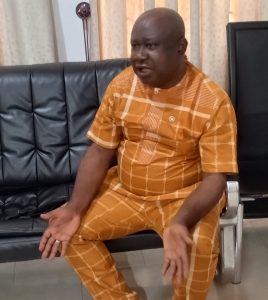
Reacting to the allegation that his tenure has expired the Deputy Rector (Academic), Dr. Adimuko Prince Obieze said that his tenure has not expired”.
“My position is on acting capacity pending the consideration by the Governing Council or replacement by the Visitor to the college, which is the Governor.”
He said his appointment was intended to prevent a vacuum in the administration of the institution.
“Nature abhors a vacuum. I was appointed in acting capacity to look after the position,” he explained.
On the broader allegation that the principal officers were abusing or mismanaging their positions, the Deputy Rector disagreed.
He said the college had a Governing Council providing oversight and that the principal officers were operating under the authority of the state government and the Visitor to the institution, Governor Alex Otti.
According to him, the present officers were essentially filling administrative vacancies in accordance with the directives of the appropriate authority.
Obieze also provided details of the dispute involving the chairman of the Academic Staff Union of Polytechnics (ASUP), Abia State particularly the allegation that the college management had been hostile to the union.
He said the present administration actually supported the establishment and development of ASUP at the college.
According to him, ASUP did not have a functioning presence at the institution before the current administration came on board.
He said the administration facilitated and funded the union’s initial activities, including its first outing in Abuja, and similarly supported the college’s welfare association.
Obieze therefore described the management’s relationship with the union as one of cooperation rather than hostility.
The Deputy Rector, however, said the relationship became strained following an issue involving the ASUP chairman, who he identified as a lecturer who allegedly failed to submit examination results after marking them.
“That is the only problem with him,” Obieze said, insisting that the issue was not about union activities but the need to ensure that students received their academic results promptly.
He said the management had given lecturers a four-week period within which to submit outstanding results.
According to him, the college considered it unacceptable for students to complete one semester, commence another and even sit for subsequent examinations without receiving their previous results.
The Deputy Rector said Heads of Department had subsequently informed the Academic Board that some lecturers were responsible for delays in the release of results and that the ASUP chairman was allegedly among those affected.
He further disclosed that the management had referred 19 administrative issues to the college’s Disciplinary Committee to ensure that the affected staff members received fair hearing.
According to him, the ASUP chairman allegedly disrupted the proceedings of the committee when he appeared before it. Obieze said the management subsequently considered his conduct insubordinate and suspended him.
Obieze also addressed Nwaubani’s claim that he was suspended without being issued a query.
According to him, the central issue was a misunderstanding of the distinction between Nwaubani’s employment as an accountant and his subsequent appointment to the office of Bursar.
“To the best of my knowledge, Nwaubani was only relieved of his responsibility as the Bursar of the college,” he said.
He explained that Nwaubani was employed as an accountant and subsequently appointed Bursar, adding that appointment to the office of Bursar was not equivalent to permanent employment in that position.
He said the government could therefore relieve him of the Bursarship without terminating his underlying employment in the civil service.
“He was employed as an accountant and by virtue of the opportunity he was appointed as a Bursar,” Obieze said.
According to him, the same principle applied to the removal from the position. “He was relieved of his duties as a Bursar, not as a staff of the college,” he said.
Obieze further maintained that Nwaubani was not under suspension as a civil servant.
Rather, he alleged that the former Bursar refused to accept the official letter relieving him of the position and subsequently stopped reporting for work.
The Deputy Rector said the management formally informed the state government of the development after Nwaubani allegedly refused to hand over.
He said security personnel were subsequently sent to the institution to facilitate access to the office.
According to him, the intervention became necessary because management could not allow the administrative operations of the college to grind to a halt. Obieze argued that Nwaubani’s position as Bursar was not permanent or a lifetime entitlement.
“He is not the first person to be relieved of his position,” he said, adding that he himself had previously been removed from an administrative position and had handed over without confrontation.
The Deputy Rector said Nwaubani could have protested, petitioned or sought administrative redress after his removal, but, in his view, he instead chose confrontation.
Obieze also gave the management’s explanation for the stoppage of Nwaubani’s salary. He said that following the introduction of the Treasury Single Account (TSA) arrangements, the college reported the situation to the state government.
According to him, management informed the government that Nwaubani was no longer reporting for duty. He said the government subsequently applied the principle of “no work, no pay”. “That was how he was removed from the payroll,” Obieze said.
He therefore disputed the allegation that Nwaubani was being denied his salary because of an arbitrary suspension.
According to him, Nwaubani was not being prevented from working; rather, he was expected to report to work and be assigned duties consistent with his status. “It is only when he comes to work that he would be given a schedule,” he said.
He argued that an employee who remained away from the workplace could not reasonably expect management to assign him duties from outside the institution.
Obieze also took issue with the reported suggestion that Nwaubani was a substantive officer whose authority superseded that of the college management.
He said the Bursar was one of the principal officers but was not the head of the institution. According to him, the institutional hierarchy placed the Rector above the Bursar.
He argued that the authority to appoint principal officers ultimately rested with the Visitor to the college, subject to the applicable governing framework.
“If you relieve me of my position as the Deputy Rector (Academic) of this college, I will go back to my office and continue to teach,” he said.
He argued that the same principle should apply to Nwaubani, who, according to him, remained a civil servant employed in the accounting cadre rather than someone permanently entitled to the Bursarship.
Obieze further said the issues surrounding Nwaubani did not originate from the Rector. He referred to a State Government-constituted Visitation Panel, saying that the panel had raised concerns relating to Nwaubani.
He also said the college subsequently established internal panels to examine aspects of his activities. According to him, the internal processes also produced findings against the former Bursar.
He maintained that Nwaubani’s refusal to comply with the directive to hand over aggravated the situation.
“In administration, when you are appointed to any position and peradventure you are relieved of the position, the first thing you do is to obey,” he said.
He argued that the affected officer could subsequently petition, protest or seek redress through the appropriate channels.
The Deputy Rector also questioned whether an employee could refuse to comply with a directive to hand over simply because he disagreed with it. “If he is directed to hand over his position, would he say no?” he asked.
His position was that the management acted on directives from the appropriate authorities.
The management’s narrative presents the ABSCOHMAT dispute as an administrative and disciplinary conflict rather than the systemic mismanagement alleged by Nwaubani.
Its central argument is that Nwaubani was not dismissed from the civil service but relieved of an administrative appointment; that he allegedly refused to accept the directive and hand over; that he subsequently stopped reporting to work; and that the government therefore applied the “no work, no pay” principle.
Be that as it may, the dispute, has moved beyond a simple disagreement between a former Bursar and his employers.
The documents behind those competing narratives may well be where the real story behind the ABSCOHMAT controversy lies.
