

IGBERE PEOPLE HOLD MOCK EZUMEZU IN ABA, MOBILIZE FOR DECEMBER HOMECOMING
Age-grade system credited with driving community development as Igbere people celebrate cultural heritage, honour retiring members
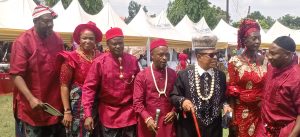
It was a colourful celebration of culture, unity, thanksgiving and communal solidarity as the people of Igbere in Bende Local Government Area of Abia State resident in Aba held their popular mock Ezumezu ceremony for 2026.
The well-attended event, which took place at the Recreation Club, Aba, on Wednesday, November 11, 2026, attracted Igbere indigenes from different walks of life, who turned out in their numbers in resplendent traditional attires to celebrate their cultural heritage and strengthen their communal bonds.
The ceremony, characterized by pomp and pageantry, provided an opportunity for the people to reconnect with their roots, appreciate God for the gift of life and reflect on the contributions of the age-grade system to the development of Igbere.
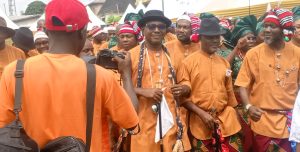
According to the organizers, the tradition, which dates back to the 1960s, has remained a veritable instrument of unity, communal service and grassroots development in Igbere, a community reputed for producing the military administrator of Old Imo State, the late Commodore Amadi Guy Ikwechegh (1986-1989), the military administrator of Anambra State, Wing Commander Emmanuel Ukaegbu (August 6, 1998-May 29, 1999) and the second democratically elected Governor of Abia State, Dr. Orji Uzor Kalu, MON (1999-2007).
Popularly known as Igbotonma, which signifies traditional retirement from active community service, the Ezumezu ceremony is held every three years and features prayers, age-grade processions, cultural displays and other traditional activities.
For the people of Igbere, the ceremony is much more than a cultural celebration. It is an enduring institution through which generations of indigenes are identified, integrated into the community’s age-grade structure and encouraged to contribute meaningfully to its growth and development.
During the Igbotonma, the most senior age grade formally retires from active service, while a new generation of young men and women, known as Umu Ebiri, is recognized and admitted into the age-grade system.
The retiring members are generally aged 65 years and above, while the incoming youthful age grade is usually made up of persons between 32 and 36 years.
Members of the same age grade are generally identified by their birth years within an agreed age bracket, often spanning three years or more.
Although retirement marks the end of active participation in the age-grade system, it does not signify the end of service to the community.
Retired members are expected to continue offering guidance, counsel and wisdom to younger generations in an advisory capacity.
The mock Ezumezu held in Aba served as a prelude to the main celebration scheduled to take place in Igbere on December 26 and 27, 2026.
It also served as a formal invitation to Igbere indigenes, their friends and well-wishers across Nigeria and beyond to participate in the historic event.
Following the main ceremony, members of the retiring Odinma Ebiri age grade will proceed to celebrate their traditional retirement in their respective homes and entertain guests.
The Aba celebration attracted several prominent sons and daughters of Igbere, who expressed satisfaction with the continuity of the age-grade tradition and its contributions to the social, cultural and infrastructural development of their hometown.
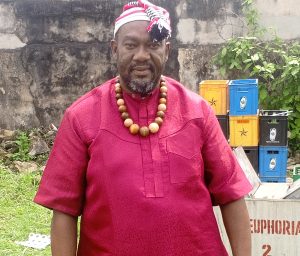
Speaking with newsmen, the President of Ucheonye Ebiri II, Amabo Unit, Mr. Ibekwe Isaac, explained that the mock Ezumezu was organized to formally invite Igbere indigenes resident in Aba, other parts of Nigeria and the Diaspora, as well as their friends, to the main Igbotonma celebration scheduled for December 26 and 27.
He described the event as a homecoming that provides an opportunity to celebrate elderly members of the community, particularly those aged 65 years and above, whose years of selfless service and contributions to Igbere were worthy of recognition.
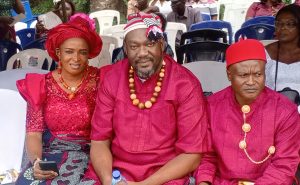
According to him, the age-grade system had taught members the importance of togetherness, brotherhood and community participation, stressing that every indigene should identify with the activities of his or her hometown and contribute to its progress.
Ibekwe noted that the age-grade system had contributed immensely to the development of Igbere, while also helping members identify their contemporaries, build relationships and sustain a sense of belonging.
He maintained that the system was particularly important because it provided companionship and support among members, especially as they approached retirement from active service.
He also emphasized the importance of preserving Igbere’s cultural heritage and transmitting it to future generations, assuring that the people would continue to uphold the tradition rather than allow it to fade away.

Also speaking, the Chairman of Ucheonye Ebiri, Aba Branch, Mr. Anyaogu Orji Ezieme, from Amankalu Igbere, said the mock celebration was organized every three years to create awareness about the forthcoming event in Igbere and formally invite people to attend.
He explained that the occasion also provided an opportunity to welcome a new age grade, known as Umu Ebiri, while elderly members prepared to retire from active community service.
He disclosed that Igbere people resident in different locations also organized similar mock celebrations ahead of the main event, adding that the Lagos Branch had held its own the previous Saturday, while their counterparts in Cotonou had also celebrated.
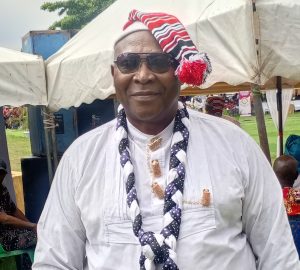
In his contribution, Hon. Joseph Imo Uche, from Umuikpo Okafia, Igbere, who belongs to Ebiri II Age Grade, expressed gratitude to God for keeping members alive to witness another edition of the triennial celebration.
He explained that following the retirement of some members of Odinma Ebiri, Obi Ebiri would be next in line, after which his own age grade, Ebiri 11 would follow.
Hon. Uche described the occasion as a special blessing, noting that survival and good health were increasingly precious amid the prevailing economic challenges and health concerns confronting many Nigerians.
He attributed the achievements recorded in Igbere to the contributions of successive age grades, explaining that each age grade was expected to undertake at least one meaningful development project for the community.
Such projects, he said, included the construction of health centres, civic halls, roads and other facilities capable of improving the living conditions of the people.
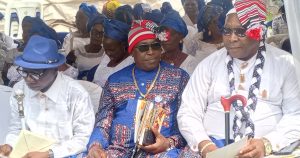
On his advice to the members of Odinma Ebiri preparing for retirement, Hon. Uche urged them not to allow the pressure of entertaining guests or impressing people to undermine their peace and financial stability.
He advised them to celebrate according to their financial capacity, avoid unnecessary competition and place their trust in God for a successful traditional retirement.
He recalled the unfortunate experience of a man who became overwhelmed by anxiety over the financial demands of his retirement celebration and eventually died before the event, with the money he had saved for the occasion subsequently used for his burial.
He therefore urged the prospective retirees to remain calm, exercise moderation and appreciate the gift of life rather than burden themselves with avoidable financial pressures.
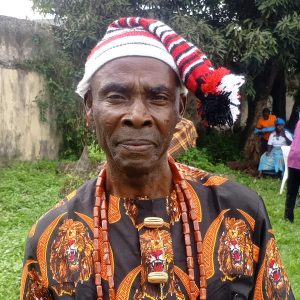
Similarly, Mr. Alfred Okebe Kalu, a former President of Obi Ebiri II Age Grade in Igbere, described the mock Ezumezu as a moment of joy and anticipation, noting that his own age grade would celebrate its traditional retirement in three years.
He explained that the symbolic presentation of the cutlass and hoe formed part of the traditional activities associated with the celebration, while the mock event was intended to prepare the people for the main Ezumezu scheduled for December 26 and 27.
Reflecting on the contributions of the age-grade system, Kalu attributed much of the infrastructural development in Igbere to the foresight of their ancestors, whom he described as the originators of the enduring tradition.
He estimated that nearly a consider part of the community’s development projects had been executed by different age grades over the years.
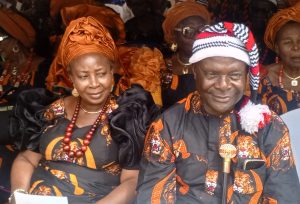
Kalu expressed gratitude to God that the members of Odinma Ebiri who were preparing for retirement remained strong and healthy, while praying for their continued good health and the resources required to celebrate their traditional retirement successfully.
In his remarks, Chief Orji Chukwu Oyeh, who celebrated his own Igbotonma in 2014, said the age-grade system had remained one of the strongest pillars of community development in Igbere.
He explained that retiring age grades traditionally bequeathed one development project or another to the community, adding that the tradition had encouraged successive generations to contribute to the collective wellbeing of their people.
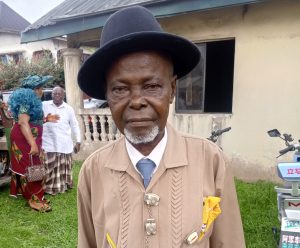
Beyond infrastructural development, Oyeh said the system had provided an avenue for indigenes to reconnect, strengthen relationships and preserve their cultural heritage.
He noted that missing the Ezumezu celebration was often a source of regret for many indigenes because of its uniqueness, grandeur and cultural significance.
While acknowledging that retirement from active service did not prevent members from continuing to contribute through advisory roles, he wished the retiring members of Odinma Ebiri a happy and successful traditional retirement and urged them to remain worthy ambassadors of Igbere wherever they found themselves.

Also speaking, the Chairman of Oganihu Ebiri II, Aba Branch, Rev. Uche Okorie, described the November 11 gathering, popularly referred to as Eleven-Eleven, as a special occasion for Igbere people resident in Aba.
He explained that the celebration was an opportunity for the people to come together, appreciate God for the gift of life and demonstrate their continued attachment to their hometown.
Omeorie expressed optimism that the mock celebration would pave the way for a successful homecoming in Igbere on December 26 and 27, 2026, praying that God would grant all participants journey mercies to and from the community.
He also expressed pride in the Igbere age-grade system, popularly known as Iruke, describing it as an important cultural institution that promotes unity, mutual assistance and a strong sense of identity among members.
The mock Ezumezu 2026 in Aba was, therefore, more than a preparatory gathering for the forthcoming homecoming.
It was a celebration of an enduring cultural institution that has continued to foster unity, promote social cohesion and drive community development across generations.
For the members of Odinma Ebiri preparing to retire from active service, the occasion represented a moment of gratitude to God for preserving their lives through the years and granting them the privilege of witnessing their traditional retirement.
