
DEMOCRACY DAY 2026: HOW DIRECT PRIMARIES EXPOSED DEEPEST BARRIERS TO WOMEN’S POLITICAL PARTICIPATION IN NIGERIA

DEMOCRACY DAY 2026: HOW DIRECT PRIMARIES EXPOSED DEEPEST BARRIERS TO WOMEN’S POLITICAL PARTICIPATION IN NIGERIA
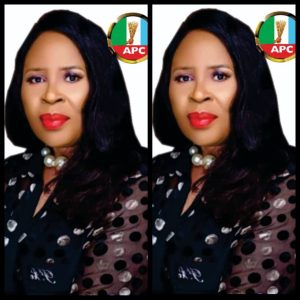
In this thought-provoking Democracy Day intervention, Hon. Dame Blessing Nwagba, PhD—a renowned political Amazon, former legislator, women’s rights advocate, APC stalwart, and leading aspirant for the Abia South Senatorial District—examines the outcome of the recently concluded party primaries across Nigeria. Her verdict is sobering
As Nigerians mark Democracy Day 2026, the occasion should inspire more than celebration—it should demand reflection and accountability. Democracy is not measured solely by the conduct of elections, but by the inclusiveness of the political process and the opportunities it creates for all citizens.
With party primaries for the 2027 general elections concluded across the country, the outcome has once again exposed a troubling reality: despite decades of advocacy, policy commitments, and public declarations supporting gender inclusion, women remain significantly underrepresented in Nigeria’s political landscape.
Most political parties adopted direct primaries, while a few relied on consensus arrangements. Direct primaries were championed as a democratic reform that would return power to ordinary party members, reduce the influence of delegates, curb backroom deals, and create a more transparent process for candidate selection.
The expectation was simple: a more open process would produce more inclusive outcomes.
The results tell a different story.
Preliminary outcomes suggest that fewer women have emerged from the 2027 primaries than did in 2023. At a time when Nigeria should be advancing toward greater gender inclusion, the nation appears to be moving in the opposite direction.
For years, many argued that the delegate system was the principal obstacle to women’s political advancement. Direct primaries were expected to dismantle that barrier. Instead, they exposed a deeper and more uncomfortable truth.
The exclusion of women from politics is not confined to party leadership circles; it is embedded throughout the political system.
Rather than reducing the financial burden of elections, direct primaries expanded it. Aspirants were required to campaign across wards and local government areas, reaching thousands of party members. The costs of mobilization, logistics, publicity, transportation, and grassroots engagement increased significantly.
For many female aspirants—who often have less access to political financing, patronage networks, and institutional support—this became an even greater obstacle.
Yet the challenge extends beyond money.
In many states where voting was conducted openly and transparently, women still failed to secure nominations. This demonstrates that the problem is not merely procedural; it is structural, cultural, and systemic.
Direct primaries exposed uncomfortable realities about Nigerian politics.
Party structures continue to favour incumbency, entrenched interests, and political networks that remain overwhelmingly male-dominated. At the grassroots level, cultural biases still shape perceptions about women in leadership. Female aspirants continue to face intimidation, character attacks, online harassment, and, in some cases, physical threats at levels rarely experienced by their male counterparts.
Changing the voting method did not change the political culture.
It did not change who controls party structures.
It did not change who controls political resources.
It did not change societal attitudes toward women seeking leadership positions.
And it did not change the unequal conditions under which women are expected to compete.
Nigeria’s National Gender Policy advocates a minimum of 35 percent affirmative action for women in governance and decision-making. Yet without enforceable provisions within party constitutions and concrete implementation mechanisms, that commitment remains largely aspirational.
The outcome of the 2027 primaries should therefore serve as a national wake-up call.
Direct primaries have delivered greater transparency, but they have also revealed where the real barriers exist. The gatekeeping is not only at the top. It exists in party structures, in access to resources, in grassroots voting patterns, and in societal attitudes that continue to limit women’s political advancement.
Democracy Day must become more than an annual celebration. It must be an opportunity to demand accountability.
Political parties should publish gender-disaggregated data from their primaries and adopt reforms that encourage meaningful female participation.
INEC must continue to strengthen transparency and promote compliance with commitments to inclusion.
Citizens, civil society organizations, and political stakeholders must confront a fundamental question: Do we want a democracy that truly reflects the diversity of Nigeria, or are we content to celebrate a democratic system that continues to exclude half of its population?
A democracy that leaves women behind cannot claim to be fully representative.
“If the 2027 elections produce fewer women candidates than were recorded in 2023, then Nigeria has not expanded democratic participation—it has diminished it”.
The true measure of democracy is not simply how many people vote. It is how many people have a genuine opportunity to lead.
As the nation marks Democracy Day 2026, the challenge before us is clear: move beyond rhetoric, honour our commitments to inclusion, and build a political system where women are not merely participants but equal stakeholders in shaping Nigeria’s future.
Until women have an equal opportunity to lead, Nigeria’s democratic journey remains unfinished.
*Hon. Dame Blessing Nwagba, PhD, is a former two-term member of the Abia State House of Assembly, Abia State Coordinator of the Nigerian League of Women Voters, APC Senatorial Candidate for Abia South in 2023, and APC Senatorial Aspirant for Abia South in 2027
